
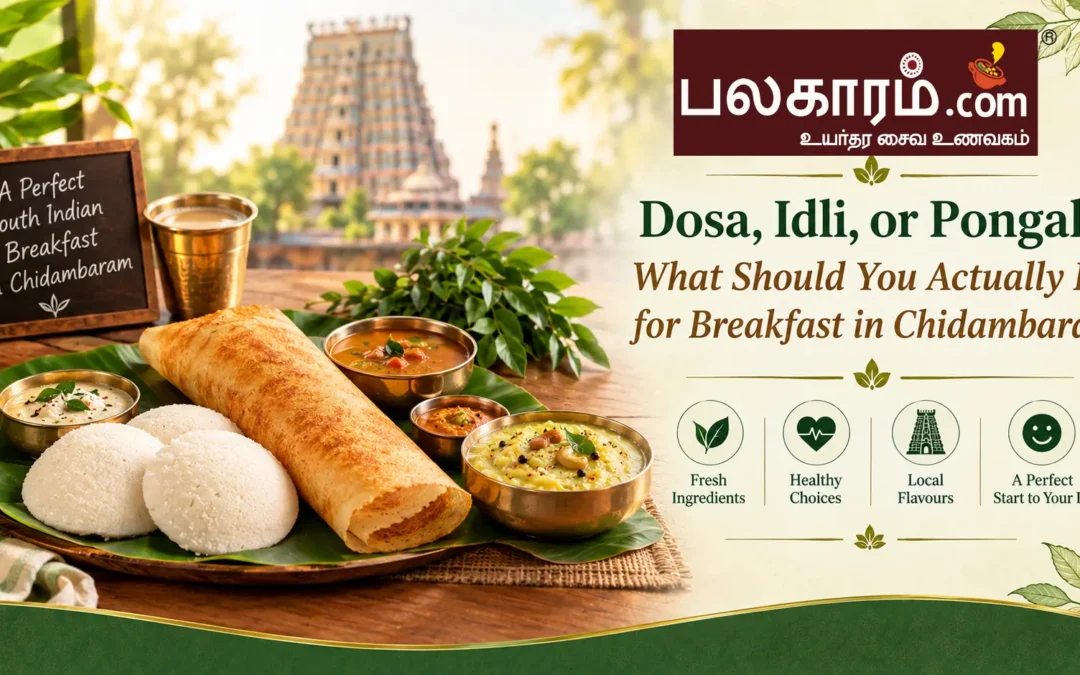
Even now, I can vividly recall how I sat at one of the little stalls in front of the East Gopuram at 6 in the morning, half asleep, and the owner only had to ask me “idli, dosa, or pongal?”. This is almost the only thing that matters in life around here. A South Indian breakfast in Chidambaram isn’t a quick grab-and-go affair — it’s a decision people actually think about, sometimes argue about, and almost always have strong opinions on.
If you’re visiting and don’t know where to start, this should help. We’ll go through all three, what makes each one tick, and which one probably suits you on any given morning.
Chidambaram Doesn’t Mess Around With Breakfast
Most people know this town for the Nataraja Temple, and fair enough, it’s stunning. But the food scene around it runs almost as deep. Grandmothers here treat idli batter recipes like family heirlooms — seriously, don’t ask someone’s amma to share her exact ratio of rice to urad dal, she probably won’t tell you.
For a typical breakfast in the southern part of India like Chidambaram, preparation needs to begin a day ahead, not on the same day. The rice and lentil mixture is soaked for some time, grounded into batter, and left to ferment overnight. It is this fermentation process that gives the idli and dosa a slight sourness.. Pongal skips all that — no soaking, no waiting around — which is part of why it tastes like a completely different animal.
Newcomers are likely to group these three dishes together, thinking they are just different versions of the same thing. However, try these dishes one after another and discover why this idea is quite wrong.
Idli — The One That Never Lets You Down
Idli is what you order when you don’t want your stomach getting involved in any drama. Steamed, soft, a little tangy — it just works, practically every time, no matter how rough your night before was.
What Sets Local Idli Apart
Idli in Chidambaram tends to carry more sourness than what you’d find in a restaurant back home or even in Chennai. The fermentation runs longer here, and cooks are oddly particular about their dal-to-rice ratio — ask three different stall owners and you’ll get three different “correct” answers, each delivered with total confidence.
Why people keep going back to it:
- Zero oil, since the whole thing is steamed
- Doesn’t sit heavy, even at seven in the morning
- Goes well with sambar, coconut chutney, or just plain gingelly oil and podi
- The one dish grandparents and toddlers can agree on
Had one coffee too many the night before? Idli won’t fight back. It’s the safest thing on the menu, and honestly, sometimes safe is exactly what you want.
Traveling with kids, recovering from a stomach bug, or planning a long day of walking the temple corridors? Idli’s your best bet. Light enough to not slow you down, filling enough that you won’t be starving an hour later.
Dosa — Crispy, a Little Show-Offy, Completely Worth It
Dosa’s the one everyone photographs before eating. Thin, golden at the edges, a bit lacy in the middle if it’s done right — there’s a reason it’s basically become the international face of South Indian food.
Getting a good dosa in Chidambaram isn’t as effortless as it looks from the outside. The tawa needs to be properly hot, the batter needs to have rested just enough, and the cook needs a wrist that instinctively knows how thin to spread it without tearing. Watch the older guys at some of the smaller stalls near the market — they barely glance at what they’re doing, and somehow every single dosa comes out perfect.
A few versions worth trying, depending on where you land:
- Plain dosa — crisp, simple, comes with sambar and two chutneys
- Masala dosa — stuffed with spiced potato, basically a full meal by itself
- Ghee roast — for the “more butter fixes everything” crowd
- Rava dosa — thinner, made with semolina, lacier than the rest
Masala dosa will carry you past lunch, easily. Plain dosa feels more like a warm-up act.
It’s not exactly light food though, and that’s worth saying out loud. Between the oil and the size some places serve, a big dosa can leave you a touch sluggish if you’ve got a full day of sightseeing right after. Still, there’s something satisfying about that crunch breaking apart in your hand that idli or pongal just can’t give you.
Pongal — The Underdog Nobody Talks About Enough
Pongal doesn’t get nearly the attention it deserves outside Tamil Nadu, and that’s honestly a bit of a shame. Rice and moong dal cooked down together with black pepper, cumin, and a generous spoon of ghee — it’s not far off from risotto, if risotto had grown up in a temple town instead of Italy.
No fermentation here at all. It’s made fresh each morning, so the taste comes out milder and rounder than idli or dosa. After a few days of tangy, fermented food, pongal can feel like a genuine reset button.
There are really two camps:
- Ven pongal, the savory one, loaded with pepper, ginger, and roasted cashews
- Sakkarai pongal, sweet, made with jaggery, usually saved for festival mornings
Given how central the temple is to daily life here, pongal in Chidambaram shows up constantly during festival season — walk past certain kitchens on those mornings and the smell of melting jaggery and cardamom is genuinely one of the nicer things this town offers.
If spicy or fried food doesn’t sit right with you before nine in the morning, this is your dish. Gentle, filling, and it pairs nicely with a small vada on the side.
So Which One Should You Actually Pick?
Honestly? None of them wins outright, and I’d be lying if I said otherwise. It comes down to your appetite that particular day, and maybe how your stomach’s holding up after last night’s dinner.
Idli is your light, no-risk option. Dosa is for when you’re genuinely hungry and want something with a bit of texture and drama. Pongal sits somewhere in between — comforting, warm, never overwhelming. A good South Indian breakfast in Chidambaram really should match your mood rather than some checklist of what’s “authentic,” because let’s be real, all three are equally authentic here.
How Locals Actually Decide, Without Overthinking It
Here’s the thing — residents don’t agonize over this nearly as much as visitors seem to. Ask someone what they’re eating and the answer’s usually just whatever their mother made that morning, or whatever the shop down the street happened to be cooking.
Still, there’s a loose rhythm to it. Weekday mornings tend to lean idli, since it’s quick before work. Weekends bring out the dosa crowd, when there’s time to actually sit and enjoy something crisp. Pongal shows up more on festival days, or whenever someone just wants something warm and homely.
Want to eat South Indian breakfast in Chidambaram the way locals actually do? Don’t commit to one dish for your whole trip. Rotate through all three over a few mornings and you’ll start noticing which shop nails their sambar, and which one wins purely because of their chutney game.
Where to Actually Find the Good Stuff
Avoid the slick-looking eateries lining the highway, especially at first. Those tiny stalls around the temple, where you find people already filling them up by 7 am, will normally have better food than fancy places. Food shops that only sell two or three things normally prepare those things very well compared to those offering all sorts of things.
Do not hesitate to ask the owner of the stall what the best thing of the day is. Most will happily steer you toward a standout idli in Chidambaram, or point out which stall down the road makes the crispest dosa in Chidambaram — pride runs deep in this business, and they know it.
Final Thought
There’s no wrong answer between dosa, idli, and pongal, whatever anyone tells you.In the end, it’s all about what your body wants at that time in the morning, rather than anything to do with authenticity from some book. A good South Indian breakfast in Chidambaram is just something that fits your mood and timing.
Still can’t decide? Try all three across a few mornings and let your own preferences sort themselves out — that’s honestly half the fun of eating somewhere new. The next time you are at the temple, hungry, don’t worry about it anymore. Simply go after the fragrance of the ghee and curry leaves, take a seat in the busiest place possible, and the rest will be taken care of by Chidambaram.