
Some days you eat purely to stop being hungry. Order, eat, pay, leave. Forgotten by evening. And then there’s the other kind of meal — the one that somehow lodges itself in memory for reasons that have almost nothing to do with the food itself.
It might have had the taste that you remember your mother making. It could be that the location just felt right, in such a way that made no one want to leave hurriedly. Perhaps the server was friendly, the food was served hot, or the people you were facing were the people you wanted to face.
That’s the whole difference, really. Food, people, the room itself, how you’re treated, a dozen tiny details nobody consciously tallies up but somehow adds up anyway.
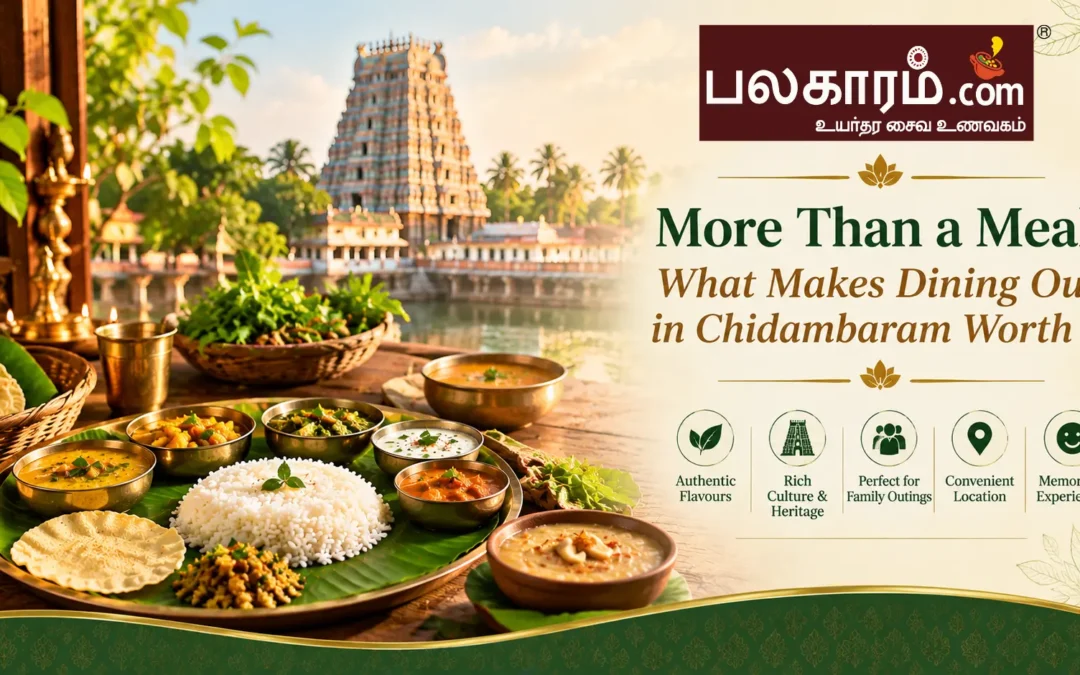
Chidambaram’s got its own food identity, stubbornly so. Traditional South Indian cooking sits right next to newer restaurant menus, and there’s no shortage of places to slow down and actually enjoy a plate of something. For locals, for visitors passing through — eating here becomes part of how you experience the town, whether you meant it to or not.
Food Gets You in the Door. It’s Not the Whole Story.
Taste matters first, obviously. Nobody’s paying for a meal they don’t enjoy on some level.
But here’s the thing — food’s only one piece.
Picture two restaurants serving nearly the same dish. One gives you something fresh, a friendly face, a clean table, room to actually sit and eat without feeling watched. The other serves basically the same plate but rushes you, or the chair’s sticky, or nobody looks you in the eye.
Same food, roughly. Wildly different memory walking out the door.
This is really the whole argument for why good dining depends on more than what lands on the plate. Everything from the second you walk in until you leave — all of it counts, whether anyone’s tracking it or not.
Familiar Food Hits Different
One of the genuine pleasures of eating out here is how tied to home it all still feels.
South Indian food isn’t separate from daily life in Tamil Nadu — it basically is daily life. Idli, dosa, sambar, rasam, curd rice, whatever vegetable curry’s in season. These aren’t exotic choices. They’re just what people grew up eating, Tuesday after Tuesday, without thinking twice.
When a restaurant gets these right, something almost involuntary happens — it starts tasting like home, even though you’re sitting in a restaurant chair, not your mother’s kitchen.
You don’t need elaborate plating or some unusual ingredient flown in from elsewhere. Hot, familiar, done properly. That’s most of it.
Though restaurants do bend it slightly — different spice ratios, a slightly different prep method, maybe a serving style that’s not quite how your grandmother did it. Small deviations. Enough to make eating out feel like its own thing, not just a copy of home.
It’s Usually About Who’s Across the Table
Ask someone their favorite restaurant memory. Half the time they won’t remember what they ordered.
They’ll remember who was there.
Food pulls people together in a way that’s almost embarrassingly reliable. Families out for a lazy lunch. Friends squeezing in a meal after work. Couples on a date. Relatives showing up for some occasion nobody quite remembers the reason for anymore.
The table just becomes where talking happens. Naturally, without anyone forcing it.
Sometimes the meal’s the whole point. Sometimes it’s just an excuse to sit together for an hour, which — honestly — might matter more these days than the food does, given how scattered everyone’s schedules get.
Feeling Welcome Isn’t Complicated
Service changes everything about how a place sits with you afterward.
Doesn’t need to be elaborate. It’s often the little things that make a difference – greeting you properly, a clean table, a staff member who really knows what is on the menu, rather than just guessing at it.
Nobody wants to feel ignored. Equally, nobody wants a server hovering every ninety seconds either. Good service finds that middle ground somehow, without it feeling calculated.
For restaurants here specifically, this personal touch carries real weight. Locals return to places where they’re recognized — not treated like a stranger every single visit.
Clean Spaces Build Trust Before the First Bite
People notice the room before they notice the food.
Is the table actually clean? Does the space look cared for? Is there some baseline sense that hygiene’s taken seriously here, not just assumed?
None of this shows up on a menu. But it shapes how relaxed you feel eating, whether you’re conscious of it or not.
Clean doesn’t require expensive. A modest place can feel genuinely pleasant through nothing more than good upkeep — organized tables, tidy serving areas, staff who seem to actually care.
Families especially weigh this heavily. A restaurant that clearly bothers with hygiene signals something bigger: that the care extends past just what’s on the plate.
Atmosphere Does More Work Than People Give It Credit For
Ever walked into a place and immediately relaxed, for no obvious reason?
Sometimes it’s lighting. Sometimes the seating. Sometimes it’s just… the feel of the room, hard to pin down exactly why.
You don’t need expensive décor for this. Decent airflow, comfortable seats, reasonable lighting, cleanliness, a layout that doesn’t feel chaotic — that’s most of what “atmosphere” actually boils down to.
A family meal wants something relaxed. A rushed lunch wants speed over ambiance. A special dinner wants quiet, maybe dimmer lights. The space should match whatever you actually came there to do.
Freshness Is Impossible to Fake
Nobody wants food that’s been sitting under a lamp for forty minutes.
Freshly made food smells different. Feels different in the mouth. This shows up especially clearly with South Indian dishes — a dosa straight off the tawa, sambar that hasn’t been reheated three times, rice that’s actually warm rather than lukewarm-adjacent.
Freshness signals care, honestly, in a way that’s hard to fake. When food arrives properly prepared and timed right, people notice, even if they couldn’t articulate exactly why the meal felt good.
Behind that, obviously, is kitchen discipline — ingredients stored right, prep organized, orders moving cleanly from stove to table without chaos in between.
Options Matter When You’re Not Eating Alone
Rarely does a whole table want the exact same thing.
One person’s craving dosa. Another wants rice. Someone else wants something light. Kids, almost by law, want something entirely different from whatever the adults are having.
A menu that’s actually been thought through makes group meals so much easier.
Doesn’t mean a hundred items either. Sometimes, it’s better to have a leaner menu that is well-executed rather than a vast one which compromises on quality due to its scope of inclusion. For a family place, having choices for everyone makes sense.
Speed Counts, Even When Nobody Says So
Good food matters. So does timing, though people rarely say it outright.
Nobody expects instant food, especially when it’s cooked fresh to order. But reasonable waits, paired with honest communication, go a long way. If something’s running late — just say so. That alone changes the whole feel of the wait.
For lunch-break diners or anyone juggling a tight schedule, efficient service isn’t a nice-to-have, it’s basically the deciding factor. Families with small kids feel this even more sharply — a long wait with a restless toddler is nobody’s idea of relaxing.
A kitchen and floor staff running smoothly signals something simple: that your time’s being respected, not just your money.
Ordinary Days Turn Into Small Celebrations
Not every visit needs a “real” occasion behind it.
Sometimes it’s a birthday. Sometimes a family reunion nobody planned well in advance. Sometimes you just finished an exhausting week and decided, spontaneously, to eat out instead of cooking.
These smaller moments add up more than people give them credit for.
A meal — even an unplanned one — can nudge an ordinary Tuesday into something slightly different. Ordering everyone’s favorite dish, sitting together for an hour with nowhere else to be, becomes its own small memory almost by accident.
Restaurants, whether they realize it or not, are just providing the space where that happens.
A Restaurant Can Feel Like the Town Itself
Food’s also just a way of experiencing a place, beyond the plate itself.
Visitors want the local flavor — actual South Indian dishes, not a watered-down version aimed at tourists. Residents mostly just want somewhere dependable, somewhere that gets it right consistently.
Restaurants end up woven into a town’s character precisely because they’re serving both crowds at once — the people who live there, and the people just passing through.
The better places don’t try too hard to disconnect from where they actually are. They understand, almost instinctively, what their regulars expect and give it to them without overthinking it.
Value Isn’t Just About the Bill
Nobody wants to feel like they overpaid for something forgettable.
Value’s not purely about the lowest price on the menu — it’s about what you actually got for what you spent. Fresh food, decent portions, a clean room, polite service, somewhere you weren’t rushed.
A modestly priced meal that genuinely satisfies beats an expensive one that underdelivers, nearly every time. For families eating out regularly, this calculation shapes where they keep going back to, whether they think about it explicitly or not.
The Small Stuff Sticks
Sometimes it’s not even the main dish people remember later.
Might be the coffee at the end, exactly hot enough. Might be whoever helped pick a dish when you were stuck deciding. Might just be a clean table, quick service, or how staff handled some small, odd request without making it weird.
These details seem minor from behind the counter. Customers notice them anyway, disproportionately so.
When those small moments keep landing right, visit after visit, people come back — not because of one standout dish, but because the whole experience consistently doesn’t disappoint.
It Was Never Just About the Food
After all of that, eating out ultimately comes down to taking a break from your usual routine for an hour or two.
It’s spending time with the family. It’s getting together with someone you haven’t seen in a long time. It’s trying something different, or enjoying the meal you’ve been having all along for no reason other than it just works.
A restaurant that understands this gets the food right, sure — but also gets the room right, the service right, the pacing right, the price right. All of it working together rather than one thing carrying the whole visit.
Why It’s Genuinely Worth Going Out Here
Chidambaram offers something specific to people who care about food — eating here stays connected to everyday life rather than feeling like a separate, performative activity. The flavors are familiar. The food culture runs deep. And restaurants quietly become meeting points for families, friends, locals, and whoever’s just passing through.
You don’t need a special occasion, really.
Sometimes a plain lunch with family is enough on its own. Sometimes a fast dinner with friends is exactly the reset you needed. And sometimes you just want to sit down to something freshly made and steal a bit of time away from everything else going on.
Because years later, you probably won’t remember every ingredient on the plate. You’ll remember how the place made you feel, who was sitting across from you, and that particular moment — not the food itself, but everything wrapped around it.
That’s really the whole reason dining out ends up meaning so much more than just a meal.