
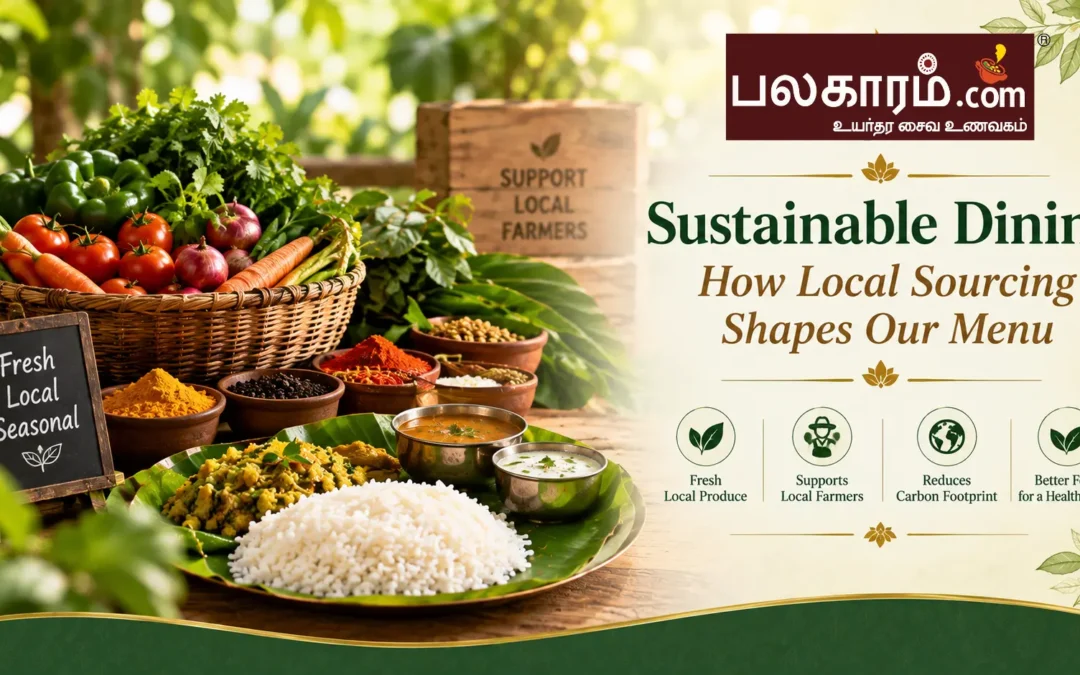
Taste it. Seriously, just taste it. That’s the whole explanation, really, for why a vegetable hauled in from three states away lands so differently on the tongue than one that was still sitting in soil forty-eight hours prior. Most people don’t consciously clock this mid-order — nobody’s standing at the counter thinking about supply chains — but it’s there. Quietly doing the heavy lifting. The reason a dish tastes alive instead of just… fine. Adequate. Forgettable by dinnertime, gone by tomorrow.
Nobody at Palagaram sat down and invented “local sourcing” as some clever line for a menu insert, some marketing flourish dreamed up in a meeting. It’s closer to just how a small kitchen in a place like Chidambaram has always run things, frankly — long, long before anyone bothered slapping the word “sustainable” onto it like a badge.
Why This Even Matters
Produce degrades. Fast, sometimes. Flavor goes first, then texture, then whatever nutrients were worth having in the first place — all of it fading the longer a vegetable sits stranded between field and plate. What we pull from nearby markets and growers skips most of that miserable lag. Less time boxed up in the dark. Less time riding around refrigerated. More time being, well — actually fresh, not just technically edible.
This isn’t purely a flavor pitch either, though it easily could be. Shorter supply chains, generally speaking, need less packaging and fewer cold trucks grinding out longer routes — a smaller footprint overall next to hauling ingredients halfway across a country. For an outfit our size, staying local was never some grand environmental gesture we announce proudly. It’s just the sensible way to run a kitchen day to day. Sensible and sustainable, it turns out, overlap more often than most people would guess.
What This Actually Looks Like
Regular trips to local markets. That’s really it. Not glamorous, definitely not press-release material — just Tuesday, basically, week after week. Vegetables and greens land within a day or two of harvest, usually, and that timing shapes what winds up in that afternoon’s sambar, or in some particular batch of poriyal nobody thinks twice about.
Seasons drag the menu around too, whether anyone here’s consciously steering it or not. Certain vegetables hit their stride at odd moments — richer, somehow, better texture out of nowhere — and cooking around that, instead of forcing the same ingredients across all twelve months, just tastes better. Not much mystery to it, honestly.
The Ripple Effect Nobody Talks About
Buying local isn’t purely about the plate. Money spent this way sticks around — farmers, vendors, the whole scrappy local market ecosystem — rather than draining off toward some faceless supply chain three states over. And in a town where local commerce still genuinely holds the place together, this kind of sourcing ends up doing something bigger than improving dinner. A lot bigger, actually, if you think about it long enough.
Waste. Nobody’s Favorite Topic, But Still Important.
Sustainable dining’s not solely about origin, where the food came from. It’s what happens next, too — once everything lands in the kitchen. Careful portioning. Using the whole vegetable, actually, instead of pitching usable parts because tossing them is quicker than bothering. Buying to match real, realistic demand rather than stockpiling out of sheer convenience.
None of it’s dramatic solo. But repeat a small habit daily, for years? Compounds.
Why This Matters Even More for a Vegetarian Kitchen
Build an entire menu around vegetables, lentils, grains — nothing meat-based lurking as backup if the produce disappoints — and ingredient quality stops being a nice-to-have. It becomes, frankly, the whole game, the only game really. Since 2015, staying tethered to local markets has stayed pretty central to how this kitchen runs, even as the menu’s sprawled well past wherever it originally started out.
What You Actually Get Out of This
Practically, this means the vegetables in your sambar or poriyal are probably fresher, more flavorful, than what you’d find at a place leaning entirely on bulk, long-haul supply. There’s also a rhythm to the menu most regulars pick up on eventually — certain dishes just hit differently at certain times of year, purely because that’s when those ingredients are genuinely at their best.
Ever notice a dish tasting unusually good on one particular visit? Seasonal timing. That’s probably why.
A Few Quick Questions
Does sourcing locally mean the menu shifts throughout the year? To a degree, yeah. Certain vegetables peak at certain times, which nudges what’s freshest and best on any given day.
Does this make food more expensive? Not necessarily — sometimes it’s the opposite. Cutting long-distance transport and storage costs can actually help keep pricing reasonable rather than pushing it upward.
How does this compare to other restaurants around town? Shorter supply chains usually mean less time between harvest and cooking. Fresher produce tends to follow from that, more often than not.
Final Thoughts
Sustainable dining doesn’t require some elaborate certification badge or a marketing team crafting the perfect story around it. Sometimes it’s just staying close to local markets, buying what’s genuinely fresh, and running a kitchen with a bit of thought instead of chasing whatever supply chain happens to be cheapest that week.
At Palagaram, this has shaped the menu since day one — and it’s a big part of why the food tastes the way it does. Fresh. Seasonal. Rooted in the same local ingredients that have fed this community for generations, long before either of those words showed up on a menu.