
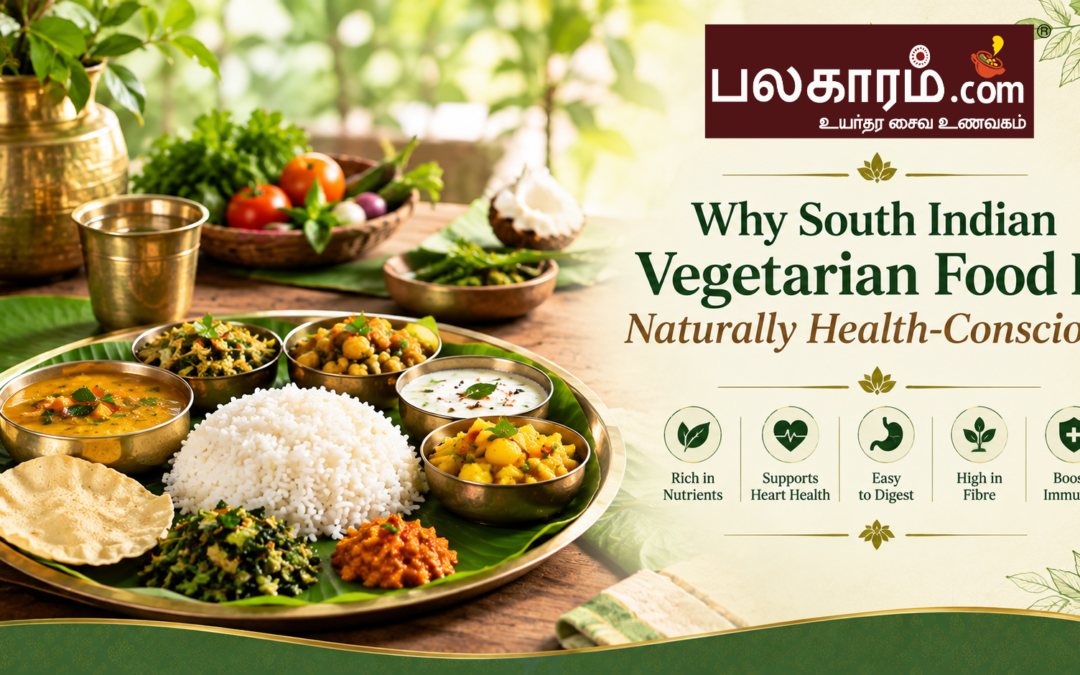
There’s something about a plate of South Indian food that just feels right — comforting, familiar, tied to family in a way that’s hard to put into words if you didn’t grow up with it. Idli in the morning. Sambar rice by lunch.Food constructed using the produce which has existed for many years, and not by any design, but just because it worked that way.
Here’s the thing people get wrong about healthy eating — they assume it needs to be complicated. Fancy ingredients, strict rules, something imported from a wellness blog. South Indian cooking never got that memo. Vegetables, lentils, fermented batters, grains, spices — all of it’s been sitting in home kitchens for as long as anyone can remember, prepared simply, eaten fresh.
If you’re in Chidambaram looking for healthy vegetarian food, turns out you don’t have to look very far. Traditional meals already do most of the work.
It’s Really About Variety, Not One “Superfood”
South Indian vegetarian food rarely comes down to one ingredient cooked one way. Look at a typical lunch — rice, sambar, a vegetable poriyal, rasam, curd, maybe some pickle on the side. Nothing fancy, but every single item on that plate brings something different.
Sambar alone might have drumstick, carrot, brinjal, pumpkin, tomato, shallots — whatever’s around, really. Poriyal adds its own vegetable portion. Curd cools everything down at the end. None of this feels like a diet plan. It’s just lunch.
That’s honestly the appeal for anyone trying to eat better without turning food into a chore.
Lentils Do More Work Than People Give Them Credit For
There’s a weird myth that vegetarian food doesn’t fill you up. Anyone who’s had a proper South Indian meal knows that’s nonsense. Dal, toor dal, moong dal, urad dal — these show up constantly, in sambar, in kootu, in half the breakfast dishes on the table.
Lentils bring plant protein into the mix, and paired with rice, vegetables, and curd, the whole meal ends up genuinely satisfying. Take kootu — vegetables and lentils and a bit of coconut, simmered together into something thick and comforting. Simple food. Doesn’t feel incomplete at all.
Fermentation — Old Technique, Still Works
Idli and dosa are probably what most people picture first. Rice and urad dal, fermented before cooking, and that process is where all the flavor and texture actually comes from — not some trick, just time and bacteria doing their thing.
A plate of soft idli with sambar and chutney brings together grains, pulses, vegetables, spices — all in one unfussy breakfast. And so has the dosa; today, you can even get versions that use millets and mixed veggies in addition to the regular ones.
This is the very type of meal that effortlessly slips into one’s healthy lifestyle without them having to give it much thought.
Vegetables Aren’t an Afterthought Here
Brinjal, ladies’ finger, beans, cabbage, carrot, beetroot, pumpkin, bottle gourd, drumstick, spinach — South Indian cooking uses all of it, and not as a garnish. Sambar, poriyal, kootu, avial, take your pick.
Even the cooking method shifts dish to dish — steamed, cooked into dal, lightly sautéed, folded into a curry.Stays exciting, really, and definitely helps with getting vegetables into the rotation each week rather than just repeating the same three again and again.
A simple beans poriyal next to rice and sambar. A vegetable kootu for something richer. Avial mixing several vegetables with coconut and mild spice. All different, all genuinely good.
Spices Aren’t Just There to Make Things Hot
People sometimes assume spice equals heat, full stop. Not really the case. Cumin, mustard seeds, pepper, turmeric, curry leaves, ginger, garlic, coriander, fenugreek — each one’s doing its own thing, adding aroma and depth rather than just heat.
Rasam’s a good example — tomato, pepper, cumin, tamarind, coriander, curry leaves, and somehow it turns a plain bowl of rice into something you actually look forward to. Spicing sensibly will not require one to add anything thick or flavorful in order to give the food flavor. Being healthy does not mean one must eat bland food. South Indian cuisine has shown that for many years now.
Simple Cooking, Not Fussy Cooking
Not all of them require much technique. You can steam them or sauté with a little oil. Pressure cook the dal, add vegetables and spices. Rice prepared separately. Pressure-cook the lentils, add vegetables and spice. Rice cooked separately. Rasam thrown together in one pot.
That said — not every South Indian dish is automatically light. Plenty involve real amounts of oil, coconut, ghee, sugar, or deep frying. Portion and preparation still matter here, same as anywhere.
But there’s enough range in the cuisine that anyone wanting simpler meals genuinely has options — steamed, vegetable-heavy, dal-based dishes that don’t sacrifice flavor for the sake of being “light.”
What About Rice?
Some people avoid rice entirely, convinced healthy eating means cutting carbs completely. That’s not really necessary for most people. It comes down to quantity and what’s on the plate alongside it.
A moderate serving with sambar, vegetables, greens, rasam, and curd is a completely different meal than a huge plate of plain rice eaten alone. Traditional meals never treated rice as the whole show — it’s one part of a bigger combination, not the entire point.
Worth paying attention to the full plate rather than obsessing over a single ingredient.
Breakfast Doesn’t Need to Be Complicated Either
Idli, dosa, pongal, upma — all popular precisely because they’re easy and pair naturally with sambar or chutney. Ven pongal specifically — rice and moong dal with pepper, cumin, ginger, curry leaves — makes for a warm, genuinely satisfying start to the day.
Idli’s soft, easy to eat. Dosa’s got that crisp bite. Upma can take on vegetables for more variety. None of it’s reserved for special occasions — this is just what breakfast has looked like for generations here.
That everyday, no-fuss quality matters. A healthy meal only helps if you’ll actually eat it regularly, not just once as an experiment.
Curd and Buttermilk Round Things Out
Curd shows up at most lunches, either mixed into rice or eaten on the side. Buttermilk’s the other staple, especially when it’s hot outside — light, cooling, often flavored with curry leaves, ginger, green chilli, coriander.
Both say something about how traditional meals think about comfort alongside taste. After a spiced, vegetable-heavy meal, something cool and simple rounds it off — no need for an elaborate dessert to feel like the meal’s actually finished.
Familiar Food, Practical Food
There’s something to be said for food that doesn’t need to impress anyone. Rice, sambar, vegetables, rasam, curd — sounds ordinary written out like that, but it’s a combination that’s worked its way into daily life across generations, for good reason.
In a town like Chidambaram, where local food and long-standing habits still hold real weight, vegetarian meals aren’t hard to find in one form or another — breakfast before work, lunch with family, dinner out. Plenty of ways to eat well without hunting for anything unusual.
It’s less about chasing a food trend and more about choosing familiar meals made with decent ingredients and reasonable portions.
Healthy Eating Really Doesn’t Need to Be This Hard
Modern food culture has a way of making “healthy” sound exhausting — elaborate meal plans, ingredients you’ve never heard of, strict rules, expensive health foods that promise more than they deliver.
Traditional South Indian cooking cuts through all that. Use vegetables. Add pulses. Eat a variety of things. Cook fresh when you can. Keep portions sensible. Let spices do the flavor work. Balance something rich with something lighter.
None of this is new advice. It’s just how meals have been put together here for a long time, long before “healthy eating” became its own industry.
Obviously, individual needs vary — anyone with a specific health condition should talk to an actual professional, not take diet advice from a blog. But for regular meals, there’s enough in the conventional method for you to use. You won’t have to look out for something different. There are times when the food that you know could be your starting point.
What Actually Makes It Work
It’s never just about that one item which stands out. It’s all about the combination – rice and dal, vegetables with spices, fermentation leading to idlis and dosas, curds completing the food cycle, and a tempering making an ordinary vegetable extra special.
Flexibility is built into the process. Same base ingredients, varied preparations according to the season, the event, or even just your mood on the particular day.
You need not change everything about your eating habits all at once. One vegetable more. Have a dal dish too. Use less oil. Be a bit more conscious about quantity. Tiny steps, but they all make a difference.
Old Tradition, Still Fits Today
This food’s lasted generations because it actually works — familiar ingredients, manageable cooking, flavors that make simple meals genuinely enjoyable. Nutrition science keeps evolving, sure, but a lot of what’s always been done in South Indian kitchens still holds up when you look at it properly.
So next time you’re looking for something healthy to eat, skip the assumption that it has to be complicated. A bowl of sambar, a plate of idli, a vegetable-heavy lunch, a simple dosa, rice with curd — any of it fits into eating well without needing to feel like a project.
Healthy eating was never really about sacrificing taste. With enough diversity, quality of ingredients, portion sizes, and some consideration when it comes to cooking, food can be not only tasty but also healthy.That’s really the whole point — and honestly, it’s been the point here for a very long time.